What does a steam shower enclosure need? A steam shower enclosure has to trap steam, so the glass runs to the ceiling (or to a header with a transom panel), and the door and panels are sealed tighter than a standard shower. An operable transom lets you vent moisture after each session.
Custom measured to your ceiling height and slope, and installed by our own Florida-licensed crew.
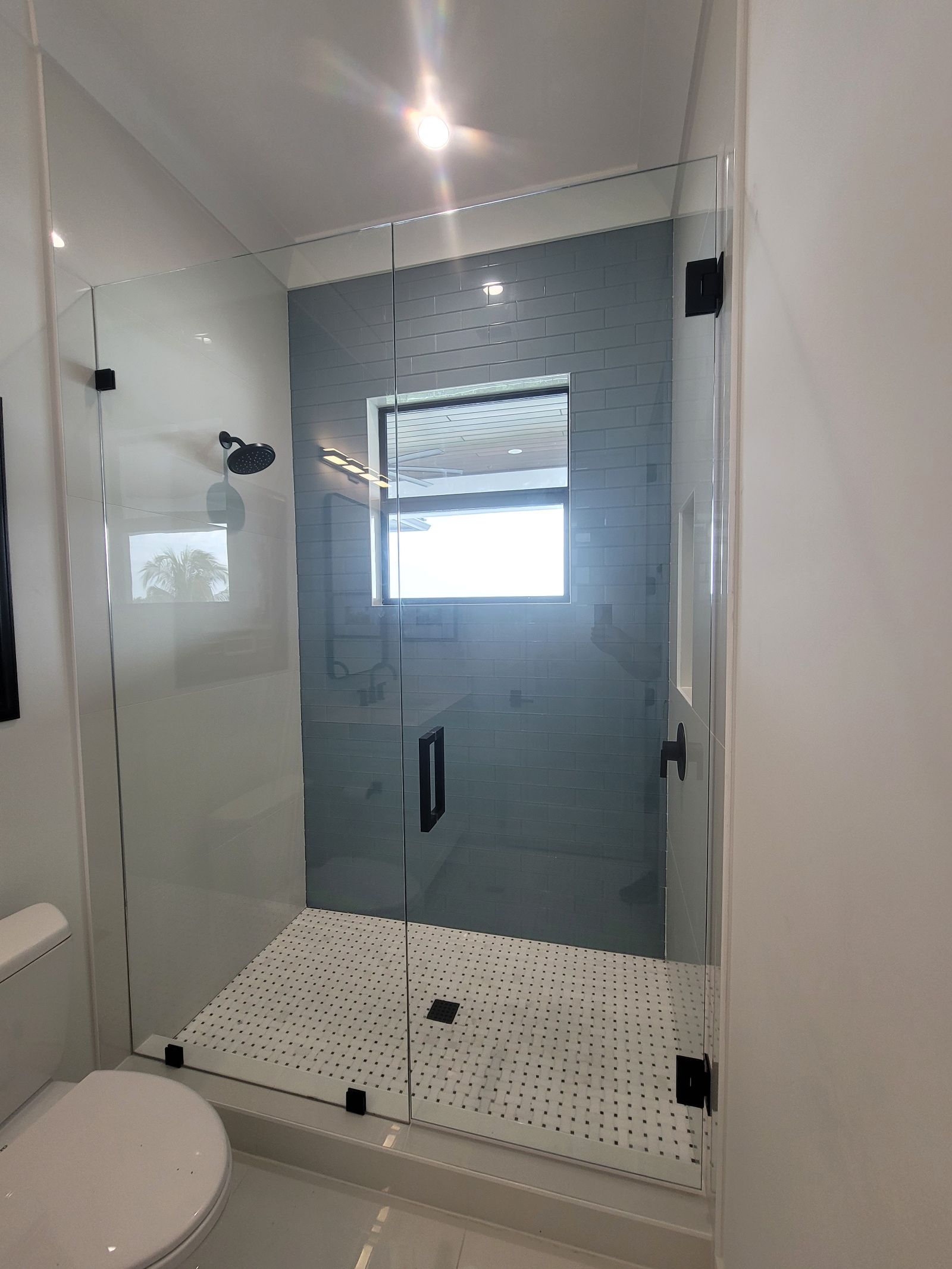
If you are building a steam shower, talk to us before tile goes up. Knowing where the glass will sit helps your contractor place blocking for hinges and plan the ceiling slope.
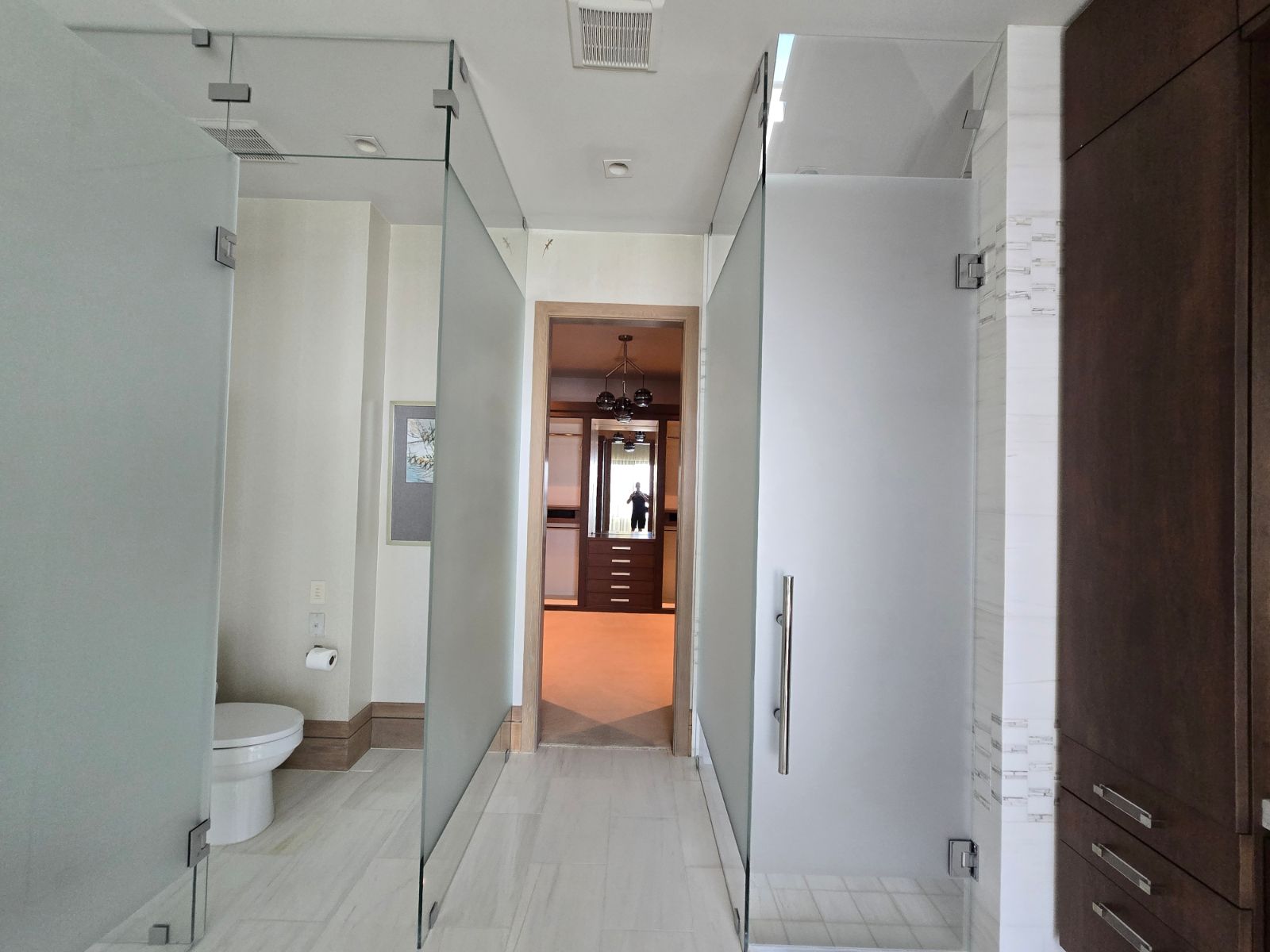
A steam shower enclosure has to hold steam in, so the glass runs to the ceiling or to a header, and the door and panels are sealed much more tightly than a standard shower. Most include a transom panel at the top, which can be fixed or operable to let steam out after use.
Yes. Steam rises, so the enclosure needs to close off the space up to the ceiling. That is done with floor-to-ceiling glass or a glass transom above the door. We measure ceiling height and slope so every piece fits tightly.
An operable transom is a small glass panel above the door that can tilt open. You close it while the steam runs and open it afterward to vent moisture and help the shower dry out.
Often, yes, but it involves more than glass. A steam shower also needs a steam generator, a vapor-proof waterproofed shower, and a sloped ceiling so condensation does not drip. We handle the glass and are happy to coordinate with your contractor on the rest.
Steam enclosures use more glass and tighter seals than a standard door, so they cost more. We give you an itemized quote after measuring. See our cost guide for what drives shower glass pricing.
Tell us about your project. We will measure, recommend the right glass and transom setup, and give you a written price.